Wednesday, July 17, 2013

Jewish and Ginger

Growing up Jewish was hard enough in the southern hemisphere of the US, but being ginger redhead on top of it was extremely hard for me growing up. Father was military and we moved from one place to another so the teasing never changed it was the same no matter what language, culture, or country we lived in. It was the same every where. Cultural reactions have varied from ridicule to admiration; many common stereotypes exist regarding redheads and they are often portrayed as fiery-tempered. Which is quite true for me. Well in all honesty I can say we do have fiery tempers. but probly no more than anyone else does with blonde or brown hair.

 As I grew up I developed a love- hate relationship with my ginger roots (in America all ginger roots are called "red hair" or a "redhead" or even "carrot top"). Funny now that I'm more frum, I do wear a ginger haired sheital (wig) because I have come to embrace my natural hair color more. While I have tried other colors in a sheital (wig), red just looks the best and more natural on me.

In the last year or so I have noticed this my ginger roots are turning pure white and a bit more blonde. I guess it is fading since I'm older. However a  fun fact is red hair never really grey out. It either turns white or fades to a pale strawberry blonde. Somehow I must cope with getting older, and  yes I do wish I had enjoyed my hair more when I was single and appreciate the beauty and rarity of it. Did you know we are 4% of the world's population? Yup we are a rarity indeed. When I was a child my hair was so dark that from a distance that it looked brown but when you walked closer it was obvious I was a redhead gingersnap. 
                                (Me at age 3 -Picture is  Copyright by Rivka Sari 2013)


I remember a few ginger head boys in Hebrew school in Nashville and the teasing oy  gevauld it was murder for them and scary to watch Jewish kids doing it too.The teasing was worse than a ginger girl would endure. Together both redheaded boys and girls however got teased in secular schools for being red haired and for being Jewish which was horrible especially when going through the teen years. That was painful!
I hate to even admit it to myself, but being the mother of two sons, I was ever so glad neither of them were redheads. I just didn't want to think of my own children experiencing the painful growth through their teen years as I had seen other young boys in school and community go through. What scares me the most is very often I notice that when young boys commit suicide due to bullying, a high rate of them are redheads. With this hair color being the rarest on earth, what does that say? Appalling!

A positive note on being a ginger and Jewish that is the rarest of all we are less then 1% of the Jewish population. I like to think we are a rare gem among the rare treasures of the smallest people in the world. That is something to be proud about.  Red hair is also fairly common amongst the Ashkenazi Jewish populations, possibly because of the influx of European DNA over a period of centuries. In Italy, red hair was associated with Italian Jews. Not sure as to why really that is, but also writers from Shakespeare to Dickens would identify Jewish characters by giving them red hair. A book called "The 7 Daughters of Eve" which traces the redheads from the Middle East to Italy, Spain, France, and then northward. So this maybe why the writers did this knowing we may have originated from the middle east. King David was said to have had red hair and a ruddy complexion or pale skin. I have even seen commentaries that state the prophets were redheads also. What is odd is when you see a redhead with brown eyes. That is also rarest to site a redhead with brown eyes and my sister was the lucky one and got the brown eyes. I so wanted brown eyes growing up.

(My brown eyed baby sister Matey Rachel-Picture copyright by Rivka Sari 2013)


Red hair is the rarest natural hair color in humans. The non-tanning skin associated with red hair may have been advantageous in
far-northern climates where sunlight is scarce. Studies by Bodmer and Cavalli-Sforza (1976) hypothesized that lighter skin pigmentation prevents rickets in colder climates by encouraging higher levels of Vitamin D production and also allows the individual to retain heat better than someone with darker skin. speaking of Vitamin D as a redhead ginger top I was told by my doctor we are the lowest in Vitamin D simply because we burn and avoid the sun. So "I do not tan I stroke" as the saying goes according to Woody Allen. However when I started taking 5000IU of vitamin D3 a day in the summer and 10,000IU a day in the winter. I have not had the sniffles of a cold or flu since May 2009. So ginger tops take your Vitamin D3 you will be glad you did it will make you feel good. Yes I do get out in the sun need to tank up for the winter months. It is ok as long as it is no longer that 15-25 mins a day.

Check out all about redheads and how the gene works http://www.brighthub.com/science/genetics/articles/4704.aspx


This has been considered characteristic of the Jews by some anthropologists. It appears to be not of recent origin, and was not unknown among the ancient Hebrews (Esau was "red, all over like a hairy garment"; Bresheit (Genesis) 25). Andree ("Zur Volkskunde der Juden," pp. 34-40) points out that the fact that red and blond Jews are found in North Africa, Syria, Arabia, Persia, etc., is proof that intermarriage has had little to do with the production of the blond type in eastern Europe. He is of the opinion that there were blonds among the ancient Hebrews, and that the modern red and blond Jews are their descendants. Many Jewish commentaries agrees in this view. The popular Jewish legends do not mention a Khazar kingdom but a kingdom of the red Jews, red being the color of their hair and maybe due to the mongoloid pigmentation of many Khazars."

Well that being said being a Jewish red head ginger top is so rare even when red hair gene occurs in all human ethnic groups. More frequently in some and less so in others. In the case of European Jews it might have something to do with the widespread Indo-European genes ( specifically, Celtic, Germanic and Slavic) in the gene pools of east and central European Ashkenazi and Spanish Shephardic Jews also. Being that we are less than 1% of a population that is 1.3% of the world's population, All I can say is Wow!! We are a miracle and being a redheaded Jewess in this world is a honor I'm not taking it lightly. That love- hate relationship of my hair has changed late in my life to love and I have a whole new level of respect for me.


Wednesday, May 8, 2013

The Pain of Loss

A Dear couple lost their baby yesterday that she carried for 23 weeks. Today she would have been 24 weeks and she was induced into labor today. As I sat here thinking of my friends and their devastating and deeply painful loss of their baby girl. I cannot help, but think of my own losses and am so relating to their pain right now and how it's devastating to them to endure this kind of pain in losing their first child. It is such a pain no one woman ever forgets.

Most people who know me may or may not know that I lost three singleton pregnancies 2002, 2003, and 2009. I also suffered a loss of twin girls in 2008 in this same month of May a few days before mother's day. Thinking of my own great pain, I feel and know their pain and the deepness of it , which is what no words can describe. My friends must feel no true comfort outside of Hashem right now. Nothing can ever ease or erase such pain and loss.


I remember reading Chana's prayer when I lost my twins, pouring my heart out as Chana had, asking Hashem for comfort. And I did find some comfort. Not because the pain was lessened or the loss was any different, but because I realized, there are no answers, but there is always prayer. There is prayer wherever there is  Chana.

Chana stands for the 3 Mitzvos of a women. "Chet" for "Challah (baking the holiday bread)", "Nun" for "Niddah (the Jewish Laws of Family Purity)", and "Hey" for "Hadlakot Haneirot (lighting the Sabbath candles)". In Chana's name, she shows us the 3 auspicious times for a women to pray. When she makes Challah, when she goes to the Mikvah, and when she lights the Shabbos candles.
 
The loss of a child, be it early on or late in pregnancy, is something so beyond our understanding. The pain is so real, so deep, and yet there is so very little to ease it, The pain is never forgotten, not lessens over time or ever leaves us. This is especially true for my friends today because they lost their first child. The pain of holding their still born daughter and letting her go is beyond words.

  I do know when all the hurt, anger, bitterness and despair, fills me that is precisely when I feel there is no where to turn- but to Hashem. The loss is so way beyond the comfort of friends or anything physical. And that's what made me realize, I need to turn to something greater than myself, greater than this world, because that is the only place I can find comfort. No-one, not even our parents, or our spouses, know the pain in our hearts as the child's mother. But Hashem, our creator, knows it all.

 
This Shabbas I will be lighting our Shabbos candles for this couple and pray in the memory of their baby girl. I'm praying Hashem will bring them comfort and great peace in Him.

Baruch Dayan Emes


Reference:
"Now Hannah, she spoke in her heart." (I Shmuel 1:13) R. Eleazar said in the name of R. Jose b. Zimra: She spoke concerning her heart. She said before Him: Sovereign of the Universe, among all the things that You have created in a woman, You have not created one without a purpose: eyes to see, ears to hear, a nose to smell, a mouth to speak, hands to do work, legs to walk with, breasts to nurse. These breasts that You have put on my heart, are they not to nurse? Give me a son, so that I may nurse with them. (Brachot 31b)

Sunday, February 17, 2013

The Hidden Story of Purim


Did you know that the story of Purim took place in Iran? Yes it did and it was named Persia not Iran. But there is more interesting details that we have overlooked and that is where are the tombs of Mordechai and Esther?

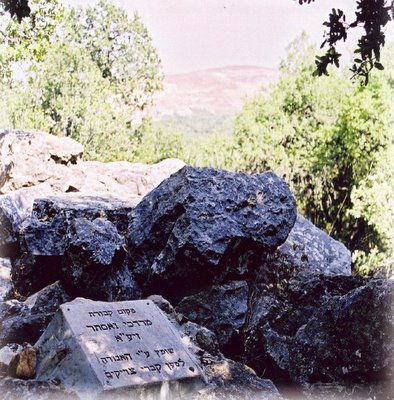
According to Esther 2:7, Esther was originally named Hadassah. Hadassah means "myrtle" in Hebrew. It has been conjectured that the name Esther is derived from a reconstructed Median word astra meaning myrtle or hidden. Given the great historical link between Persian and Jewish history, modern day Persian Jews are called "Esther's Children". A building known as the Tomb of Esther and Mordechai is located in Hamadan, Iran, although the village of Kfar Bar'am in northern Israel also claims to be the burial place of Queen Esther. A few years ago, the normally hostile Iranian regime took the rather unusual step of adding a Jewish holy site to its National Heritage List.  Reguardless both sites are perserved and protected.

It is said that Morechai is in Iran and Queen Esther is in Israel. I'm not certain which place is correct or who is where. It is a fact that the high mountains of Iran that there is a city called Hamadan. BUT, notice that if you remove a “da” from Hamadan, you get “Haman.”  Haman, by the way was the one who tried to get Mordecai hung, but instead was hanged on the gallows that he had built for Mordecai (Esther 7:9-10). I don’t know when Hamadan was renamed, but at one time it was called “Shushan,” and that is where the Queen Esther and Mordechai story takes place.
 
There is a tomb for Queen Esther and Mordechai, and that tomb was built right in the middle of what is now known as Hamadan, but was indeed recorded as being Shulshan Persia.
Iran has the largest Jewish community in the Middle East -20,000 to 25,000 by different estimates after Israel, and the shrine is visited by many pilgrims every year.

Iranian Jews revered the shrine, and many would travel to Hamadan to observe Purim there by reading the Megillah alongside the tomb. Others held family celebrations, such as bar-mitzvahs or circumcisions, at the site.

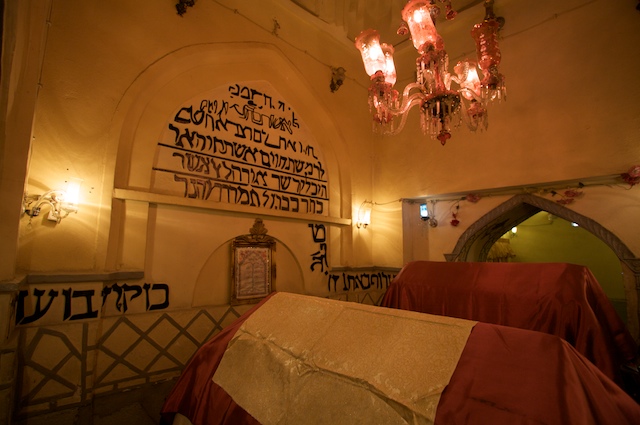
The entrance to the building is said to have been built intentionally low, in order to compel visitors to bow their heads upon entering, thereby engendering a requisite attitude of respect. Inside the main hall, which is adorned with Hebrew inscriptions, lie two large, decorated wooden boxes, or trunks, below which are said to be the final resting places of Mordechai and Esther.

A small synagogue adjoins the tomb, and the site is also considered holy by Muslims and Christians, who come to pray there as well.

Next to the mausoleum lies a large hollow in the ground, which Iranian Jews believe to be an entrance to a tunnel that stretches all the way to Jerusalem.


See picture here inside:

https://upload.wikimedia.org/wikipedia/commons/e/ee/Tomb_of_Ester_and_Mordechai_interior.jpg

The article entitled, "Who is Buried in Queen Esther's Tomb?" states:

"While various monuments in Persia have been cited as their burial place, a strong alternate tradition indicates that even though both Esther and Mordechai died in the Persian capital city of Shushan, they were brought to Eretz Israel for burial. Written tradition from the Middle Ages locates the burial place in the Galilean village of Bar'am, along Israel's northern border with Lebanon."


Apparently, this written tradition began with the account of HaRav Shmuel ben Shimshon who visited the site Bar'am in 1211. In 1537, the sefer Yichus Ho'ovos Vehanivi'im recorded, that "every Shushan Purim a minyan goes to her grave [in Bar'am] from Tsefas and reads the Megillah there."

The article later notes that knowledge of the exact location of the kevarim was lost over the centuries. The site identified today as the kevarim of Mordechai and Esther is located "more than a kilometer southwest of the ruins of ancient Bar'am".


As early as 1215, Rabbi Menachem Ha-Hevroni wrote that while visiting the Galilee, he came across the tomb of Queen Esther, "who, during her lifetime, had instructed her son Cyrus to bring her there [for burial]". Later pilgrims mentioned the site, and noted that special celebrations were held there on Shushan Purim. Currently, the tomb is believed to be located in the ruins of a building found in the Baram National Park.

Why is this hidden?  Maybe it does not matter where they are buried? Or perhaps Queen Esther wanted it this way to teach us a new lesson or continue to teach us new and hidden messages? Even while I can not say with any certainty which of the two locations is more authentic or correct, of one thing we can all be sure: the deeds of these two great Jewish people will never fade from our collective memory. As the Megillah (9:28) itself tells us: "and these days of Purim shall not pass from among the Jews, and their memory shall not elapse from among their descendants".


Tuesday, November 27, 2012

Daddy Come Home

For all who have served , who are military brats or are now serving in either America or Israel. For all those Daddy's who did not come home too PLEASE  Hashem Please Bring ALL the Daddys Home to their Families and bring Peace with Moshiach Now!!!!

Enjoy this touching video.
For all of those who served/serving our country and those who are guarding the holy land of Israel!

http://www.youtube.com/watch?feature=player_embedded&v=xF7UVW6PLig


Shalu Shalom Yerushalyim!
"שאלו שלום ירושלים"
Psalms 122:6

Thursday, November 8, 2012

Raising Jewish Kids.

I do not raise my children to be Jewish, I raise my Jewish children.
Amazing how confused Jewish parents are about that when it comes to their children.
One local Jewish community member says to me "I'm raising my children Jewish" and I said "Huh! I'm raising Jewish children" and she turns to me and says "WOW! That is a good point!"

No Jewish parent should ever allow any community to raise their...

Jewish children and tell them they have to be Jewish when somehow all those precious Jewish children were not born Jewish enough. WHAT?! Amazing how Jewish Parents do not understand they are raising Jewish children in their Jewish homes with their Jewish values. It all starts in the home first. Jewish Community is in the home first. Your home sets the pace for your child on if they will be Shomer Shabbos and keep Jewish values of Torah and Mitvos and someday marry someone Jewish.

Then She asks me "What about Jewish Education are they not helping parents to raise their kids to be more Jewish?"
And I said to her, "Jewish education institutions is fine as long as you understand those institutions are educating Jewish children with their Jewish values, and not educationg your children to be Jewish". She says, "I guess I need to rethink my thinker".

Make the changes you need to to give your Jewish children the Jewish community (your home) where they can be themselves as Jewish children first. Being in outside Jewish community and getting a Jewish School Education is just refining the values they should already have. Parents you have the power is in you to guide the precious Jewish childrenyou have been given to stay Jewish. After all isn't that really what you are concerned about?

Monday, August 20, 2012

Sunday, January 8, 2012

Giving rude religious Jews the boot!

I was at a show recently and I was just absolutely shocked by seeing a beautiful and exceptionally polite Chabad Rebbetzen walking around in platform skinny heel boots that went to her knees. It look like someone took a very long carpenter's nail and nailed it on the bottom of her boot and called it a heel. Platform skinny heel boots conger's up scenes in a urban movie of a lady of the night with alot of violence drugs and alcohol. I do not watch movies like that, but have seen plenty ads for such movies like that. I shook my head in shock and I was thinking "wow things have changed among our Chabad women's dress code of Tzniut".  It was not the first time that I have seen the dress styles among religious frum women that were boardering and almost breaking Tzniut Jewish halacha.
http://youtu.be/F_pfFuDkj0Q

Then the Beit Shemesh Chereidim attacks a little girl that is the grand daughter of dear friends in Israel. A Modest religious family is attacked by the Chereidim for what they claim she a 7 year old for being immodest! what? What is going on here? Then a Chereidi little girl gets attacked in Beit Shemesh too? What is this?Many think of Judaism as a single religion, but it has as many denominations and subsets as Christianity does. Orthodox Judaism equally breaks down into countless subsets. Most of the problems in Jerusalem concern 19th century immigrant sects which never reconciled themselves to the creation of the State of Israel, and have in some cases made common cause with Islam. That being said it is a complicated issue. I do not think there needs to be one way of expressing Judaism in observence. The common thread should be that we all are Torah observant to the best of our understandings and family traditions and no I'm not talking about secularism either.

What do I mean by this? Shulchan aruch שׁוּלחָן עָרוּך‎, literally: "Set Table" which most would immediately think "Code of Jewish Law" right? Yes of course, but let's simplify this a bit to understand where I'm coming from. Every household has a way of abserving Jewish law (Shulchan Aruch) by the way their families for generations have done things and not to mentione in the siddur prayers alone there so many tunes to these prayers which most if not all these tunes are due to weather the family is Sephardic or Ashkenazic or the fact the family has lived in Spain, Turkey, Iran Iraq and even the United States. Not to mention which Posek Rabbi one's family may follow. This is where all the different subsets of Judaism formed. So in essence every Jewish family have traditions that can reflect how they observe and dress Tzniut according to how they "set their Observence of Torah tables". Not literally setting their tables, but setting traditions according to their families generations of traditions. This means that people do set their level of observence to their understandings and is influenced by their family traditions. I have personally have seen differences among Chereidim in traditions from one shabbos table to another or one shul to another and yes even in the dress code of in Tzniut in Chereidt women depending on the neighborhood or block or street they live on. I have seen some frun women pushing of the envelope so close in breaking Tzniut that boarders one to question what is she thinking? I have see this among almost every facet of religious subset  groups by simply living in Israel and having family that are of many different subsets of Judaism living there too. Like for example there is difference in the way Jews from the southern part of the United States vs. a Jew from the southwest, mid west or even the north west or the northeast part of the United states do things. Their Traditions of Torah observence are all different from one another.

The fact that everyone of these Jews can pray together is amazing because they may have different tunes for any one prayer from the siddur, but each Jew  can adapt and read the prayers together and honor one another with respect to each other's differences. It is amazing when you wittness that in action.  I have seen this first hand in Chabad and I have been blessed to wittness this even with Rabbi Shlomo Carlebach zt'l of Blessed Memory. The Renewel movement seems to get the point also of just respecting every Jew and be accepting and loving and kindness to one another. The Lubatcher Rebbe OBM says that "Every Jew is a Diamond". So I ask why are we breaking precious Diamonds into a million pieces by acting like this towards one another? That is just creating more divisions among us. As for the Rebbetzen and her boots well she was dressed modest and no skin was showing, not her knees,  not her calfs,  not her arms, nor her neck etc. It's her choice to wear boots like that and she was not breaking any modesty code of Tzniut within Chabad simply because she was covered from head to toe and I do know she would not wear them if that were breaking halacha. I cannot be the one to tell her how to set her table of observence either. Even though I want to give those Chereidim the boot out of Beit Shemesh that spit on my friend's grand daughter or give the boot to the modern orthodox that attacked the Chereidi girl. The best we can do is pray for tshuva for those who are unkind and causing harm to other. We cannot radiate light to the nations if we continue to stomp out the lights amongst us. So yall Knock it off . Love and peace to us all!! Kol Hakavod!